Call Today For An Appointment

(630) 824-3757
Showing posts with label orthodontics wheaton il. Show all posts

Monday, July 6, 2020

Definitions of Parts of Your Braces

Here are definitions of some of the key terms used for the different elements of braces.

Appliance: Something attached to teeth to move them or change the shape of the jaw

Arch Wire: Metal wire which is attached to brackets to move teeth

Band: Metal ring placed on teeth to hold on parts of braces

Bracket: Device glued on to teeth to fasten the arch wire

Orthodontic Chain: Used to hold archwires into brackets and to move teeth

Ligating Module: Small plastic donut-shaped device to hold the arch wires in the brackets

Lingual Appliances: Orthodontic devices fixed to inside of teeth

Mouthguard: Protects your mouth from injury during sports and other activities to limit injuries

Retainer: Device usually worn for some time after braces removed to hold teeth in position

Wax: Helps stop braces from irritating your lips especially in early stages

Monday, June 22, 2020

What is Orthodontics?

Orthodontics is a special branch of dentistry that focuses on the treatment of teeth and jaws that are misaligned. 

The word comes from the Greek words orthos meaning straight or proper, and odont meaning tooth.

It is concerned with the treatment of malocclusions or improper bites. These may arise from tooth irregularity, problems with the jaw or both. 

You may seek orthodontic treatment for cosmetic reasons or for health reasons. 

Cosmetic reasons are usually due to feeling low self esteem due to the appearance of your mouth or smile.

However more serious heath problems can include difficulties chewing, which can lead to digestion problems.

Issues with the alignment of your teeth and jaws can also cause sleep and breathing problems such as snoring or sleep apnea.

In addition, some orthodontists work on reconstructing the entire face rather than focusing exclusively on teeth. 

Orthodontic treatment will depend on the diagnosis of the orthodontist after taking x-rays and molds.

The treatment may include braces or other devices to realign teeth. In sever cases, surgery may be needed.

Some estimates say that more than half the US population has problems with misaligned teeth or jaws so orthodontics plays an important role. 

Monday, June 15, 2020

How Dental Braces Work

Dental braces are orthodontic devices which help realign the position of your teeth.

They may be used if you have bite problems (also called malocclusions), crooked teeth, gaps or other problems with your teeth.

Although they are mainly used on children and teenagers - as treatment is easier when you are still growing - adults can also benefit from braces.

Braces are made up of three basic parts: 
- Brackets
- Bonding (or band)
- Arch wire

The way braces work is that the teeth are moved through the use of force - the wires in the braces push the tooth in the desired direction.

When this happens, there is a biological response which leads to bone remodeling. Bone is created on one side and resorbed on the other side.

A tooth will usually move about a millimeter per month during orthodontic treatment but there are big variations depending on the individual and the exact treatment.

Monday, June 8, 2020

The Pros and Cons of Invisalign Braces

Invisalign braces have become popular as an alternative to traditional braces as they are cosmetically more appealing.

They are known as "invisible braces" but they actually work in a very different way to the traditional approach.

Rather than using brackets and wires, Invisalign uses aligners to move your teeth into new positions. 

These aligners are clear and removable.

In order to use the Invisalign approach, you will have X-rays and molds taken which are then used to help an orthodontist plan your treatment.

The Invisalign aligners are built specifically for your mouth and each aligner is meant to be worn for two weeks. You then move on to the next aligner and the whole process can take about one year.

Pros
Virtually invisible so only you know you are wearing them

Easier to clean than traditional braces

More comfortable than traditional braces so less risk of irritation

Removable so can be taken out for eating or just for a break

Cons
Can be more expensive than traditional braces

Won't work for everybody

Must follow instructions exactly

Teeth are still being moved so some chance of pain

Monday, June 1, 2020

A Quick History of Orthodontics

While you may think braces are a modern invention, the fact is people have been using devices to move their teeth since the early days.

Archaeologists have discovered mummified remains where there were metal bands wrapped around individual teeth. 

As far back as 500 BC, Hippocrates and Aristotle were both talking about ways to straighten teeth and fix various dental conditions. 

However, despite all the evidence from early times, it was around the 1700s before the most significant developments began to happen in orthodontics.

In 1728, French Dentist Pierre Fauchard published a book called the "The Surgeon Dentist" with an entire chapter on ways to straighten teeth. He used a horseshoe-shaped metal device to help expand the arch. 

While teeth straightening has been practiced since early times, orthodontics did not really begin as a science in its own right until the mid-1800s. 

Norman W. Kingsley wrote the first article on orthodontics in 1858 and J. N. Farrar was the first dentist to suggest the use of mild force at timed intervals to move teeth. 

In the early 1900s, Edward H. Angle devised the first simple classification system for malocclusions, which is still used today as a way for dentists to describe how teeth fit together. 

In the early 20th century, gold, platinum and silver were routinely used in braces and the bands wrapped entirely around the each tooth. They continued to wrap around the teeth until the mid 1970s, when direct bonding became possible. 

In the 1070s, systems were developed to place braces on the inside surfaces of the teeth - lingual or invisible braces. 

In the future, it seems likely that braces will be smaller, less visible, more comfortable and will be needed for much shorter periods of time.

Monday, May 25, 2020

Common Questions About Braces

Here are the answers to some common questions about what it like to have braces

What is it like having braces?,
When you have braces, you will probably find your mouth sore for a few days. It can also be uncomfortable when the braces are tightened. However, most of the time you probably won't even notice them.

Do braces hurt?
It can depend on which type you choose but usually modern braces will not hurt except for the first few days or when they are tightened.

While the manufacturers are always looking for ways to make them more comfortable, a little discomfort at the beginning is still common. You will be able to take some painkillers if necessary. The pain may be greater if you start orthodontic treatment when you are an adult.

Will it be embarrassing to wear braces?
Over 70% of teenagers wear braces and therefore most people have some experience of them so there is no need to feel embarrassed. If you start treatment when you are an adult, the proportion of people wearing braces is lower but you will still find most people supportive.

Will braces cause sores in my mouth?
Sometimes you might experience sores on your lips in the first few days. These can easily be rinsed in water or special solution and will usually heal within a week or so. You can also put wax on the braces to prevent the braces from rubbing and irritating the sore.

How long does orthodontic treatment take?
It varies a lot depending on exactly what changes need to happen in your mouth. When started young it may last a few months. From the age of 12, it can take a year or two and perhaps more for adults. However it depends very much on your personal situation and your orthodontists will be able to advise you.

Friday, May 15, 2020

We Are Now Doing New Patient Consult Virtually


Reopening Our Orthodontic Practice -COVID 19


May 7, 2020 Twin Oaks Orthodontics Reopens during Covid 19 Pandemic
                                     
As an essential business our reopening may have you wondering what precautions we are taking to ensure your safety.  While the appointment process may look a little different, don’t worry! We have always been on the front lines of preventing the spread of diseases.  From treatment and waiting room disinfection to the strict use of personal protective equipment (PPE), the safety of patients and staff members continues to be of utmost importance.  During the COVID-19 crisis and beyond, the safety of patients and staff continues to be a top priority:

Before, during and after treatment:
When it comes to preventing the spread of disease, rest assured that we will be strict on universal precautions.  Precaution include the use of masks, glasses, gloves, sterile instruments and devices as well as clean and disinfected environmental surfaces.
Additionally, frequently touched surfaces such a door handles, chairs, desks and bathroom are cleaned and disinfected often. Other surfaces that are difficult to disinfect, such as magazines, reading material and refreshments stations will be removed all together.
WE ARE ASKING THAT YOU BRUSH YOUR TEETH AT HOME AND USE YOUR BATHROOM AT HOME BEFORE COMING TO THE OFFICE.  PLEASE WEAR YOUR MASK AND RUBBER BANDS TO THE OFFICE.  THANK YOU!

The process may look a little different:
We are scheduling each patient for one hour initially.  Your check-in will involve a few extra steps to help ensure the safety of patients and staff.  The process will include screening questions, waiting in your vehicle versus the waiting room and following social distancing and infection control etiquette.  We recommend against bringing companions to appointments.  If parents do accompany patients, they may also be asked to wear mask and answer screening questions during the patient check-in. 
During your appointment, you will be asked to use a hydrogen peroxide rinse, which just helps bring down the amount of germs and viruses in the mouth to a lower level.  There will be fewer patients in the office at one time to promote social distancing.  If you have any questions or concerns, Dr. Wiley and Keila are available to provide answers.
Rest assured we will be following any recommended precautions to treat all orthodontic patients safely.

TRUST AN AMERICAN ASSOCIATION ORTHODONTIST:  DR. EVELYN R. WILEY

During this pandemic we have adopted an Online Smile Assessment Protocol.  We can now set up new patient consultations on line, so please refer us to your friends and family for this NO RISK way to get started with braces and a great smile.  IT’S A FREE, SIMPLE AND QUICK WAY TO SEE IF BRACES CAN HELP!

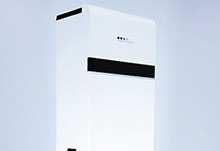
Jade Air Purification System


We use the most effective commercial air sterilization and purification system ‘Surgically Clean Air 301F’ air purifier. This air purifier combines six stages of sterilization and purification to remove dental office odours, toxins, pollutants and other airborne microbial contamination in the office. The six stages of sterilization and purification includes four capture stages and two kill stages for volatile organic compounds, bacteria and viral infectious agents.

Many health issues arise from the air that we breathe every day. Allergies and asthma plague a large percentage of the population due to poor air quality.  We care about our patients health and we are proud to offer Surgically Clean Air purifying system.
What is Surgical Clean Air system?
The Surgically Clean Air system is a world-class medical-grade indoor air cleaning system, equipped with a 6-stage filtration process that’s designed to remove Chemicals, Toxins, Germs, Odors, and most importantly kill airborne Viruses, to help reduce the spread of illness.
How Does it Work?


Surgically Clean Air For Our Patients


It’s a matter of life and breath: Downtown Dental is the first dental practice in the southeast to invest in Surgically Clean Air purification system for patient care

Hospitals, Medical Labs, Dental Clinics and Surgery Centers throughout North America are using Surgically Clean Air Purifiers to improve the quality of their Indoor Air for their Patients and their Staff.  These world-class medical-grade air purifiers remove Chemicals, Toxins, Germs, Odors, and most importantly they kill airborne Viruses, to help reduce the spread of illness.

DENTAL OFFICE AIR QUALITY: WHAT YOU DON’T KNOW WILL HARM YOU


Dental offices are high traffic spaces: our regular, daily interactions with patients can introduce bacterial, viral, and fungal infections into the air. The indoor air within dental offices contains unhealthy and often infectious airborne pollutants. The ultrasonic instruments we use, along with the constant cleaning and disinfection of contact surfaces can create bio-aerosols that can contaminate the indoor air and increase the unhealthiness of the dental office. These pathogens can stay airborne for hours, even days.

WHAT SETS SURGICALLY CLEAN AIR APART?

The system doesn’t just filter pollutants, germs, and other damaging toxins: it destroys them.

Dental procedures inadvertently generate aerosols, containing organisms and debris from each patient’s oral activity, and these can be harmful to everyone present in the clinic…. air filters result in the significant reduction of viable particles in the air. Hazardous bioaerosols created during dental procedures can be significantly reduced using an air cleaning system.

6 STAGE FILTRATION & STERILIZATION PROCESS


The purification system incorporates six (6) distinct stages that remove particles including Odors, Gases, Mold, Allergens, and Viruses.

BOTTOM LINE: HEALTHIER AIR, HEALTHIER PATIENTS + STAFF

Microbial air pollution is a real health issue and this is where technology helps makes us a better, healthier practice. Air purification systems can play a role in significantly reducing transmittable bio-aerosols.
We invested in a Surgically Clean Air system because we believe that paying attention to the quality and purity of the air in our office creates a win/win situation for our patients and team members. 


The air inside any building can get stale. The reason is that most buildings, in addition to holding in the heat during the winter and the AC during the summer, can also keep in airborne toxins, molds, and germs that can cause illness and infections.
While clean air is important in any workplace, but it's absolutely essential in dentistry, where patients from all walks of life spend a significant amount of time sitting with their mouths wide open.

An Elevated Standard of Air Filtration

When it comes to our patients' health, we don't take chances. We know that it's worth the extra investment to get the best equipment on the market, and our Surgically Clean Air system is the best of the best.
Standard air systems have simple filters that can take a lot of the debris out of the air, but their filters tend to be too simple to catch the various types of airborne dangers, and they often don't have nearly enough power to properly circulate clean air throughout the entire office, sometimes creating just a pocket of clean air in an otherwise contaminated space. It might suffice for some, but the average air purifier falls short of our standards.
The Surgically Clean Air system is a surgical-grade indoor air cleaning system, equipped with a 6-stage filtration process that's designed to grab all harmful particles, big and small, and packs enough power to constantly scrub every inch of the office.

Breathe Easy at Waterloo Smiles

We want every patient to walk in our office with absolute peace of mind that everything in our office, right down to the very air they breathe, meets even the most rigorous of patient health and infection control standards.

Surgically Clean Air

As part of our commitment to providing a safe and comfortable environment, Sun Valley Dental Group PLLC offers Surgically Clean Air. Surgically Clean Air is a premium indoor air purification industry which not only filters pollutants, but destroys them. Surgically Clean Air features:
·        A six-stage filtration and sterilization process to remove odors, gases, mold, allergens, viruses and other particles
·        A sound dampening design which operates at a comfortable level no louder than your kitchen dishwasher
·        Large capacity airflow management to clean large spaces
·        Smart control features for ease of use – these features also prompt us when things need to be done to give you the comfort of a worry-free environment

To learn more about Surgically Clean Air in Ketchum, Idaho, and schedule an appointment with Dr. Brian Galbraith, call us today at 208-726-4711. Our dentist and team are committed to your smile, oral health and comfort.

Before your visit, please review our COVID-19guidelines: 

COVID-19 Guidelines


·          
Surgically Clean Air's JADE Air Purifier is a Medical Grade Air System that is One of the Most Advanced on the Market. In response to the COVID-19 pandemic, and to ensure our office is free from viruses and bacteria, two JADE units have been installed.